China Best Minimalist Office Furniture for Better Focus?

Time:2026-10-19 Author:Isabella
0%

China’s minimalist office furniture market offers practical solutions for quieter, more focused workspaces. Clean desks, slim storage units, and supportive chairs can reduce visual distractions. Less visual noise. That matters during long periods of writing, planning, or screen-based work.

This guide examines Why minimalist office furniture improves focus through real workplace details. A desk with concealed cable management keeps chargers from spreading across the surface. A matte finish reduces harsh reflections near a window. Adjustable chair height supports better posture when meetings run beyond an hour. China-based manufacturers also offer flexible materials, finishes, and dimensions for home offices, studios, and commercial environments. However, attractive photographs do not prove product quality. Buyers should check load capacity, edge finishing, warranty terms, and relevant safety documentation before ordering.

Reliable evaluation requires more than a stylish showroom impression. Look for stable frames, smooth drawer movement, low-odor materials, and replacement-part support. Certifications may vary by product and destination, so verify current documents directly with the supplier. In practice, even the finest minimalist desk cannot solve poor lighting, noise, or an uncomfortable monitor position. This point is easy to overlook. The best choice balances appearance, ergonomics, durability, and actual working habits. Some recommendations may still need adjustment after daily use, because focus depends on both furniture and personal behavior. A restrained workspace helps, but it is not a guaranteed cure for distraction.
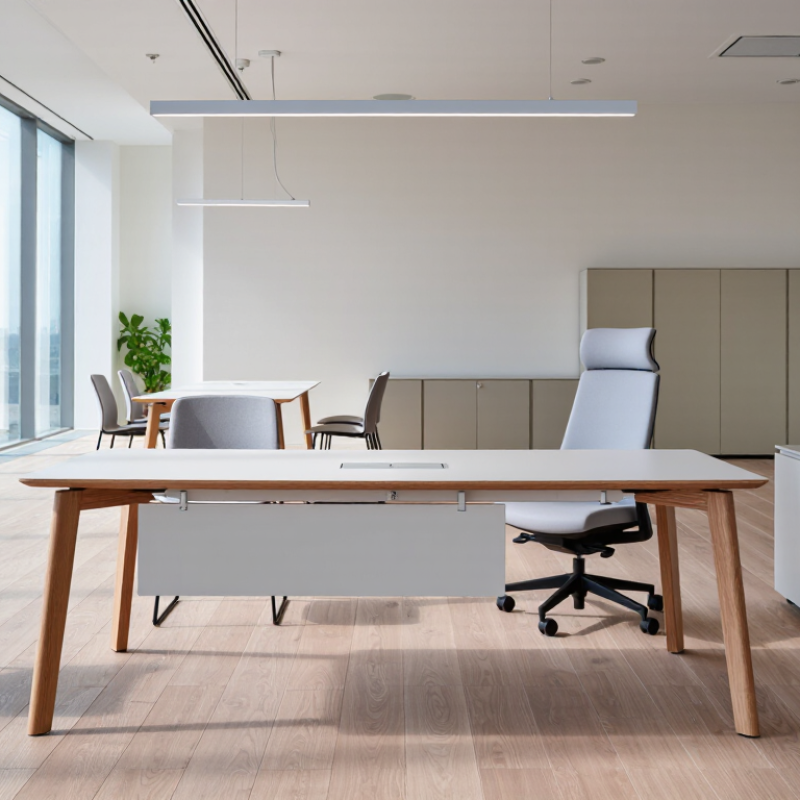
China Best Minimalist Office Furniture for Better Focus?

What Defines Minimalist Office Furniture in China?

In China, minimalist office furniture is defined by purpose, not by an empty appearance. A useful piece removes visual noise while supporting long periods of focused work. Clean lines, restrained colors, and concealed storage are common features. Yet these details must serve movement, comfort, and maintenance. A desk with a thin top may look elegant, but it can feel unstable when monitors shake.

Practical design begins with proportion. A work surface should leave space for a keyboard, documents, and a small writing area. Height adjustment helps different users maintain a relaxed shoulder position. Rounded edges reduce daily knocks, especially in shared offices. Cable channels keep chargers away from feet and make cleaning easier. Durable laminate, powder-coated steel, and responsibly sourced wood can improve service life when properly tested. In professional purchasing, inspect joints, drawer runners, surface resistance, and load capacity rather than trusting photographs. This is where experience matters. Small flaws appear quickly.

Chinese production also allows flexible dimensions and finishes for compact rooms, training areas, and open-plan workplaces. However, customization can become excessive. Too many colors, partitions, or decorative grooves weaken the calm effect. Minimalist furniture should leave intentional breathing space, not create storage problems. A white desk may reveal dust and fingerprints by afternoon. That is not a design failure, but it demands a realistic cleaning plan. The best choices balance visual quiet, ergonomic evidence, repairability, and the habits of actual users. A beautiful room still fails if people cannot find a pen.

How Minimalist Furniture Supports Focus and Productivity

China Best Minimalist Office Furniture for Better Focus?

How Minimalist Furniture Supports Focus and Productivity

A minimalist office reduces visual competition around the worker. A clear desk, slim storage, and a calm color palette can make task selection easier. Microsoft’s 2023 Work Trend Index reported that 68% of people lack uninterrupted focus time. Furniture cannot solve every interruption, but it can remove avoidable ones. A compact desk with concealed cable management keeps screens, documents, and tools in defined zones.

Small details matter.

Ergonomic support also protects concentration. Adjustable desks, supportive chairs, and monitor stands help employees maintain a neutral working posture. The International Ergonomics Association links human-centered design with improved comfort, safety, and performance. In daily use, this may mean fewer posture changes during a two-hour writing session. It may also mean less reaching for chargers, notebooks, or shared equipment.

Minimalism is not automatically productive. An empty desk can feel sterile, and excessive openness may create distraction. Gensler’s 2023 Global Workplace Survey emphasizes the value of choice between focused, collaborative, and restorative settings. A practical minimalist layout should therefore include one quiet workstation, acoustic separation, and nearby storage. I have found that workers often need visual calm, not complete emptiness. This distinction deserves more testing across different roles, cultures, and room sizes.

How Minimalist Furniture Supports Focus and Productivity

A minimalist workspace can reduce visual distractions and make it easier to maintain attention. Research on knowledge work found that interruptions occurred roughly every 3.1 minutes, while returning to the original task could take about 23.3 minutes.

Data source: University of California, Irvine observational research on workplace interruptions, 2008. A clear desk, limited visual clutter, and dedicated storage can help create a more focused working environment.

Key Materials, Designs, and Features to Consider

China Best Minimalist Office Furniture for Better Focus?

Key Materials, Designs, and Features to Consider

Minimalist office furniture made in China can support focus when materials serve a clear purpose. Look for durable plywood, bamboo panels, or responsibly sourced wood veneer. Powder-coated steel adds strength without making a desk appear heavy. PET felt panels can soften echoes in open offices. Check material documentation and indoor-emission test reports before purchasing. A clean look should not hide weak construction.

Desk design matters as much as appearance. A work surface around 60 to 80 centimeters deep gives most users room for a monitor and notebook. Rounded edges reduce pressure on your wrists during long sessions. Cable channels keep chargers away from your hands and sightline. Adjustable legs are useful when several people share one workspace. Matte finishes help reduce glare from windows and overhead lights. Small details matter.

Storage should be close, but not distracting. A slim drawer can hold pens, cables, and documents without consuming legroom. I once chose a very plain desk with no rear cable opening. It looked elegant, but daily setup became irritating. That mistake changed my buying checklist. Test drawer movement, desk stability, and surface texture in person when possible. Also check whether replacement parts are available. Beautiful furniture is not automatically practical.

How to Choose the Right Furniture for Your Office

China Best Minimalist Office Furniture for Better Focus?

Choosing the right furniture starts with observing how your team actually works. A slim desk can reduce visual noise, but it may feel cramped after several hours. Measure the room, walking paths, monitor depth, and storage needs before buying. I once selected attractive narrow desks for a small workspace, then noticed employees kept documents on the floor. The design looked clean, but the workflow was poor.

Focus on comfort, adjustability, and reliable construction. Choose a desk with enough depth for a monitor, keyboard, and notebook without crowding. An adjustable chair should support the lower back and allow both feet to rest on the floor. Prefer stable frames, smooth edges, and surfaces that resist daily stains. Materials should also be easy to maintain. Minimalist does not mean fragile.

Tips: Test one workstation for a full week before furnishing the entire office. Watch for shoulder tension, screen glare, and blocked storage. Keep frequently used items within reach, while hiding rarely used supplies. Leave enough space between desks for quiet movement. Ask employees for feedback, even when it challenges your original plan. A beautiful layout can still fail.

Leading Chinese Options for a Minimalist Workspace

Leading Chinese Options for a Minimalist Workspace

Chinese manufacturers now offer practical options for focused workspaces, including height-adjustable desks, slim storage, acoustic screens, and modular task chairs. Many use powder-coated steel, bamboo panels, and light wood finishes. These materials create a clean visual field without making the room feel empty. The 2024 Global Workplace Survey by the Gensler Research Institute found that workers perform best when offices support both focused work and collaboration. A quiet desk is useful, but flexibility matters too.

Look for desks with stable frames, cable channels, and a working depth of at least 70 centimetres. Chinese suppliers producing to BIFMA or ISO standards can provide clearer testing records. The World Green Building Council reports that efficient building strategies can reduce energy use by 20% to 30%. Choosing durable panels and replaceable components supports that goal. A practical setup might include one compact desk, a mobile pedestal, and a fabric screen near the user’s shoulder. Small details reduce visual interruptions.

However, minimalism can become sterile. I have seen pale rooms with hard surfaces that felt strangely tiring after two hours. Acoustic absorption was missing. Soft upholstery, warm lighting, and one visible plant may improve comfort without adding clutter. Product photographs can also hide wobbling frames or sharp desk edges. Request samples, load-test results, warranty terms, and installation guidance before ordering. The best Chinese option is not always the cheapest one; sometimes, it is the piece that remains quiet, stable, and repairable after daily use.

China Best Minimalist Office Furniture for Better Focus? – Leading Chinese Options for a Minimalist Workspace
Furniture Category Typical Dimensions Recommended Materials Key Functional Features Best Workspace Use Focus and Ergonomic Value
Electric Height-Adjustable Desk 120–160 cm wide × 60–80 cm deep; height range approximately 70–120 cm Powder-coated steel frame with a 20–25 mm laminated or veneer desktop Dual-motor lifting system, memory height presets, cable-management tray, anti-collision protection Dedicated home offices, executive workstations, and shared work areas Allows alternating sitting and standing positions and helps maintain a clean, uncluttered desktop
Minimalist Fixed Desk 120–140 cm wide × 60–70 cm deep; fixed height generally 72–75 cm Melamine-faced engineered wood or solid wood top with a steel or aluminum frame Simple rectangular surface, concealed cable port, slim legs, optional modesty panel Small offices, study rooms, and focused computer work Provides sufficient space for one monitor, keyboard, task lighting, and essential stationery without visual clutter
Compact Corner Desk 140–160 cm long × 120–140 cm return; typical depth 60–70 cm Scratch-resistant laminate or melamine board with powder-coated steel supports L-shaped work surface, integrated cable grommets, optional under-desk pedestal Rooms where one workstation must support both computer work and paperwork Separates digital and writing zones while using corner space efficiently
Ergonomic Task Chair Seat width approximately 47–52 cm; seat height approximately 42–52 cm Breathable mesh back, molded foam seat, nylon or aluminum base Adjustable seat height, lumbar support, tilt tension, five-star base, casters suitable for the floor type Long-duration computer work and open-plan workstations Supports neutral sitting posture and reduces the need for distracting posture adjustments
Monitor Arm Typical reach 35–55 cm; mounting range commonly supports 17–32 inch monitors Aluminum or reinforced steel arm with a clamp or through-desk mounting plate Height, tilt, swivel, and rotation adjustment; integrated cable clips Desks requiring a clear surface or multiple-screen setup Raises the screen toward eye level and frees valuable desk space for focused work
Low-Profile Storage Cabinet 80–120 cm wide × 35–45 cm deep × 70–75 cm high Powder-coated steel, melamine-faced board, or a combination of both Sliding doors or soft-close hinged doors, adjustable shelves, optional lock, anti-tip design Personal offices, meeting rooms, and compact team workspaces Stores documents and accessories out of sight while keeping frequently used items accessible
Open Shelf Divider 80–120 cm wide × 30–40 cm deep × 110–160 cm high Powder-coated steel frame with laminated board, wood veneer, or felt panels Open compartments, optional acoustic felt backing, modular linking components Shared offices that need light zoning without full-height partitions Defines personal space while preserving daylight and reducing visual interruptions
Acoustic Desk Screen 120–160 cm wide × 30–45 cm high above the desktop; thickness commonly 9–24 mm Recycled PET felt, polyester fiber, or fabric-wrapped acoustic board Clamp-on or surface-mounted installation, cable routing, pinboard-compatible surface Open-plan offices, hot-desking areas, and shared study spaces Reduces nearby visual distractions and helps absorb high-frequency conversational noise
Adjustable Task Light Arm reach approximately 35–55 cm; lamp head commonly 30–45 cm long Aluminum or reinforced polymer housing with a weighted or clamp base Dimmable LED, adjustable color temperature, articulated arm, low-glare diffuser Reading, drafting, detailed paperwork, and screen-based tasks Provides targeted illumination without occupying much desk space or creating excessive glare

Dimensions represent common specification ranges offered in the Chinese office-furniture market. Actual dimensions, materials, load ratings, adjustment ranges, and compliance documentation should be confirmed in the product specification before purchase.

FAQS

What defines minimalist office furniture?

It reduces visual noise while supporting focused work. Clean lines, restrained colors, and concealed storage are common. Empty-looking is not enough.

How much desk space does one worker need?

Leave room for a monitor, keyboard, documents, and a small writing area. A narrow desk may look neat but feel cramped later.

Why is desk height adjustment useful?

It helps users keep relaxed shoulders during long work periods. Different people need different heights. One setting cannot suit everyone.

Which details improve daily comfort?

Rounded edges reduce knocks. Stable frames prevent monitor shaking. Cable channels keep chargers away from feet and simplify cleaning.

What materials suit minimalist office furniture?

Durable laminate, powder-coated steel, and responsibly sourced wood can support longer service. Test their actual resistance. Photographs prove very little.

How should buyers inspect furniture before ordering?

Check joints, drawer runners, surface resistance, and load capacity. Test one workstation for a full week. Small flaws appear quickly.

Can customized furniture work in compact offices?

Yes, flexible dimensions can suit small rooms, training areas, and open workplaces. Too many colors or partitions may weaken the calm effect.

What cleaning issues should a minimalist office expect?

White surfaces can show dust and fingerprints by afternoon. Create a realistic cleaning plan. Beautiful surfaces still need practical maintenance.

How can teams test a new office layout?

Watch screen glare, shoulder tension, storage access, and walking paths. Ask employees for honest feedback. The original plan may be wrong.

Conclusion

Minimalist office furniture in China is defined by clean lines, practical proportions, neutral colors, and a deliberate reduction of visual clutter. Rather than filling a workspace with unnecessary decoration, it prioritizes useful surfaces, organized storage, comfortable seating, and flexible layouts. Why minimalist office furniture improves focus is closely connected to its ability to create a calmer environment, reduce distractions, and support more efficient work routines. A well-planned minimalist setting can also encourage better posture, smoother movement, and clearer task organization.

When selecting furniture, consider durable materials such as responsibly sourced wood, metal, glass, and easy-care surfaces, while checking stability, ergonomics, size, and adaptability. Desks with integrated cable management, adjustable features, modular storage, and simple seating designs can improve both comfort and productivity. Chinese minimalist workspace options often emphasize efficient space use, thoughtful construction, and functional design, making it easier to create an office that feels orderly, professional, and focused.

Isabella

Isabella

Isabella is a dedicated marketing professional with a sharp focus on driving brand growth and engagement through strategic content creation. With an extensive background in digital marketing, she combines her passion for storytelling with her keen understanding of industry trends to deliver......