How to match office sofas with existing decor is not just a color-matching exercise. The sofa has to work with the room’s scale, lighting, materials, and daily use. A charcoal sofa may suit a walnut desk, yet feel heavy beside pale walls and a narrow window. Interior designer Nate Berkus has said, “Your home should tell the story of who you are, and be a collection of what you love.” That principle can guide office choices too: a room should feel coherent, not copied from a showroom.
This guide looks at practical ways to connect a new sofa with existing office decor. It covers color relationships, upholstery texture, furniture proportions, and details such as legs and cushions. Start by observing what is already there: the undertone of the floor, the finish on the desk, and how daylight changes the wall color. Small samples help. View them in the office, not only under store lighting. A close match can sometimes look flat; contrast may give the room more character. Still, a bold choice is not automatically better. A patterned sofa might compete with busy artwork, and a sleek frame may feel out of place beside traditional furniture. There is no perfect formula. The useful choice is the one that supports the room’s function while making its existing pieces feel considered. One detail may still feel off. Notice it before ordering.
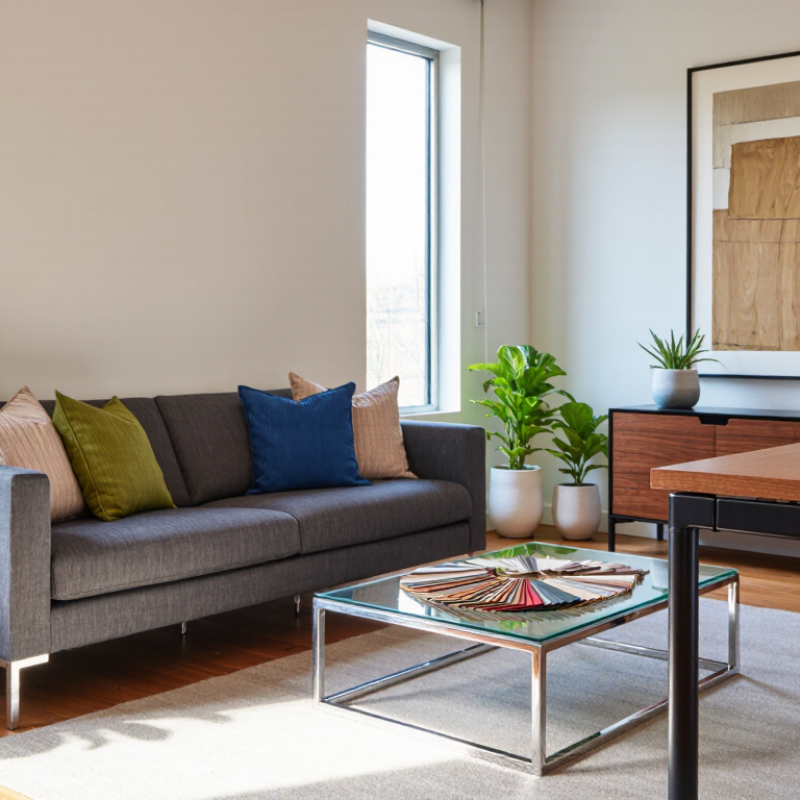
Before choosing an office sofa, map the room as it is—not as you wish it were. Measure wall lengths, door swings, window positions, and the clear width of busy walkways. Measure before browsing. Note fixed features too: radiators, power outlets, and cabinets can make an apparently perfect sofa awkward in daily use. A 2024 Global Workplace Survey covering 16,000 office workers in 15 countries offers a useful reminder: office needs vary widely, so one standard layout will not suit every team. Treat that scale of research as context, not as a substitute for observing your own space.
Then study the existing decor in daylight and under evening lighting. Record dominant colors, wood tones, floor texture, and the visual weight of nearby desks. A low-backed sofa may preserve sightlines in a compact room, while a deeper, darker piece can make a large reception area feel more grounded. Small details matter. Check whether people can pass behind seated guests without turning sideways, and whether the sofa blocks a view or makes a shared table hard to reach. I still find color matching easy to overthink: a close-but-not-exact wood tone can look more accidental than a deliberate contrast. Use a fabric swatch beside the floor and desk finishes before committing. Keep a little breathing room around the sofa; an exact wall-to-wall fit often looks efficient on paper and cramped in practice.
Choose the sofa by the job it must do, not by its silhouette. A reception sofa should support brief waits; a project-area sofa needs upright seating, nearby power, and a small table. For laptop use, look for a firmer seat and supportive arms. Start with the task. Gensler’s 2024 Global Workplace Survey included more than 16,000 workers across 15 countries. That broad sample is a useful reminder: one seating setup may not suit every work style.
Measure the room before choosing dimensions. Note the sofa’s width and depth, door swings, nearby desks, and the route people use while carrying bags. A wide sofa can look modest on a plan, then crowd the passage in real life. Keep circulation clear and check local accessibility guidance. A plan can deceive. Place the sofa where it supports conversation without blocking daylight or sightlines. Match its fabric to existing wood, rugs, or wall colors, then inspect a sample under the office’s actual lighting. Leesman’s workplace-experience dataset includes responses from more than one million employees worldwide; a quick floor-tape mock-up is still worthwhile before ordering.
| Office Function | Suggested Sofa Size | Placement | Useful Clearances | Match with Existing Decor |
|---|---|---|---|---|
| Reception and short waits | Two-seat sofa: about 60–78 in wide and 32–38 in deep. | Place near the entrance, facing the reception desk or a focal wall; keep the entry route open. | Allow about 36 in for a main walking route where space permits; leave roughly 18 in between the sofa and a coffee table. | Echo the reception desk’s wood tone or metal finish. A durable, easy-clean upholstery color works well with frequent use. |
| Informal meetings | Two- or three-seat sofa: about 66–90 in wide and 34–40 in deep. | Arrange opposite lounge chairs or a small table so people can converse without blocking doors or circulation paths. | Keep about 18 in from the front edge of the sofa to a coffee table; provide a clear route around the seating group. | Coordinate the sofa’s leg finish and upholstery undertone with nearby chairs, flooring, and meeting-room accents. |
| Breakout or collaboration area | Three-seat sofa: about 78–96 in wide and 34–40 in deep; check the footprint against the room plan. | Use as one side of a flexible seating cluster, with movable chairs or ottomans rather than a fixed, enclosed layout. | Keep primary walkways clear; avoid placing the sofa where it narrows access to exits, doors, or shared equipment. | Repeat one existing accent color in cushions or upholstery, while keeping larger pieces in a color that suits the room’s overall palette. |
| Quiet lounge or waiting zone | Compact two-seat sofa: about 60–72 in wide; a shallower profile can help in a narrow room. | Position away from busy workstations and direct door swings; use a rug or low divider to define the area if appropriate. | Measure the full sofa depth, including cushions, and preserve an unobstructed route through the room. | Choose a fabric texture and color that complement existing curtains, rugs, or wall finishes without competing with them. |
| Large shared lounge | Three-seat sofa or sectional; measure each section and the total footprint before choosing. | Float the sofa to divide the lounge from adjacent work areas, or place it against a wall if that preserves a more open route. | Check clearances on every open side and make sure the sectional does not obstruct doors, windows, or circulation. | Relate the sofa’s scale to other large furnishings. Use a similar wood or metal finish to connect it visually to the existing room. |
Planning note: Measurements are approximate starting points, not fixed standards. Measure the room, doorways, lift access, and the sofa’s complete footprint before purchase; follow applicable accessibility and building requirements for circulation routes.
Read the room before choosing a sofa. In a formal office with crisp desks, glass partitions, and straight lines, a low-profile sofa with squared arms usually feels at home. For a relaxed studio with timber shelves and soft lighting, rounded arms and visible wood legs can echo the warmer details. The sofa should relate to the room, not imitate every piece in it.
Shape affects both appearance and movement. Measure the wall, doorway, and walking route before settling on a silhouette. A compact two-seat sofa suits a narrow reception area; a longer, gently curved model can soften a wide, open lounge. Leave clear space around the sofa so visitors can pass without brushing its arms. Small detail. Check the seat depth, too: a deep lounge seat may look inviting but feel awkward during a short meeting.
Use existing colors as a guide. Pick up a secondary shade from a rug, artwork, or chair fabric, then choose a sofa tone that sits comfortably beside it. Neutrals are flexible, but a room full of beige can feel flat. A muted green or rust may add character without dominating. These guidelines are not perfect; lighting can shift how upholstery looks, so compare fabric samples in the actual room before ordering.
Match sofa style and shape to the office design
Ratings are practical visual-fit scores on a 1–5 scale, based on how each sofa’s shape and materials typically complement the listed office style. They are styling guidance, not results from a measured survey.
An office sofa should feel connected to the room, not copied from it. Start with a color already present in the space, such as the muted green in a rug or the warm gray of a wall. Pull one or two tones from nearby furnishings, then choose a sofa shade that sits comfortably beside them. A small fabric sample can look different under bright windows and warm ceiling lights, so check it in both conditions. Keep it simple.
Material matters as much as color. A matte woven fabric often softens glass and metal desks, while leather-look upholstery can echo polished surfaces without adding another busy pattern. In a compact office, pale upholstery may help the sofa feel less bulky, but it can show marks more readily. Consider how the room is actually used before choosing a finish. I still find texture matching tricky: too many nubby fabrics can make a tidy office feel cluttered. A little contrast usually works better than perfect coordination.
Before choosing an office sofa, inspect it under the room’s actual lighting. Warm bulbs can make cream upholstery look yellow; cool daylight may reveal blue or gray undertones. The U.S. Department of Energy reports that LEDs use at least 75% less energy and last up to 25 times longer than incandescent bulbs. That matters when lighting stays on all day, but it does not guarantee flattering color. Check fabric samples beside the flooring and wall paint, morning and afternoon. A dark sofa can hide marks. It can also make a dim corner feel heavier.
Durability deserves the same practical test as appearance. ANSI/BIFMA X5.4 covers lounge and public seating, including structural and durability testing; ask suppliers which applicable tests their seating has passed. Check seams, cushion recovery, and whether covers can be cleaned without changing color. For 2026, softer curves, warm neutrals, and modular layouts are visible design directions, but trends should not dictate every purchase. A compact curved sofa may soften a boxy reception area, while a modular shape can adapt when teams move. I’d still question pale bouclé in a busy corridor. It looks inviting, but cleaning it may become a daily chore. Make the sofa feel connected to the room, not merely current.
Start with the task, not the shape. Reception seating should support short waits. A project area may need upright cushions, nearby power, and a small table. For laptop use, choose a firmer seat and supportive arms.
Measure the sofa’s width and depth, door swings, nearby desks, and walking routes. Include the space people need while carrying bags. Measure twice. A floor-tape outline can reveal crowding before delivery.
Place it to support conversation without blocking daylight, sightlines, or circulation. Keep doors and desk routes clear. Plans can deceive.
Hold fabric samples beside the floor and wall paint. Check them under the office’s actual lighting, both morning and afternoon. Warm bulbs can make cream look yellow; cool daylight may reveal blue or gray tones.
Ask which applicable lounge-seating tests it has passed. Inspect seams and press the cushions to check how they recover. Confirm that covers can be cleaned without changing color.
Yes. Efficient lighting can stay on for long workdays, but it does not guarantee flattering colors. Check upholstery under the lights people will actually use.
Softer curves, warm neutrals, and modular layouts are visible design directions. A curved sofa may soften a boxy reception area. Modular seating can adapt when teams move, though it may not fit every room.
It can look inviting, but frequent cleaning may become a chore. I’d still hesitate before choosing it for heavy foot traffic. The right choice depends on the room’s daily use.
How to match office sofas with existing decor begins with understanding the room as it is. Consider the office’s colors, finishes, lighting, traffic flow, and available space before choosing a sofa. Decide whether it will support quick conversations, informal meetings, or quiet breaks, then select a size and placement that serve that purpose without blocking walkways or making the room feel crowded.
Choose a shape and style that complement the office’s design, and coordinate upholstery colors, materials, and textures with nearby furniture and finishes. A neutral sofa can create a calm foundation, while a carefully chosen accent color can add character. Check how natural and artificial light affect the sofa’s appearance, and prioritize durable, easy-care materials suited to regular use. Finally, draw inspiration from 2026 design trends while keeping comfort, practicality, and a cohesive overall look at the center of the decision.

Correo Office