What Are the 10 Best Sustainable Office Furniture Trends?

Time:2026-09-14 Author:Liam
0%

Sustainable office furniture is moving beyond recycled materials and attractive green labels. Today, responsible design considers the entire product journey, from raw materials and manufacturing to repair, reuse, and eventual recycling. A desk made from certified timber, for example, should also use durable fittings and replaceable components. Otherwise, its environmental promise may be weaker than it appears.

What are the latest trends in sustainable office furniture? The answer includes circular design, reclaimed wood, recycled metals, low-emission finishes, and furniture-as-a-service models. Modular workstations are gaining attention because damaged panels can be replaced without discarding the whole unit. Height-adjustable desks are also becoming more efficient, especially when manufacturers publish material disclosures and product life-cycle data. These details help facilities managers compare genuine progress with vague marketing claims.

Small choices matter.

In my experience, the most credible sustainable offices combine environmental goals with everyday practicality. Chairs must remain comfortable after long meetings. Storage should withstand repeated relocation. Products should also support healthier interiors through low-VOC adhesives and transparent chemical information. Yet no trend is perfect. Recycled materials can require complex processing, while flat-pack products may sacrifice durability when poorly designed. This is where professional evaluation matters. Buyers should review certifications, warranty terms, repair options, supplier evidence, and total ownership costs before making decisions. The ten trends explored here offer useful direction, but they require careful questioning. Sustainability is not a finish applied to furniture; it is a measurable commitment carried through every stage of office use.
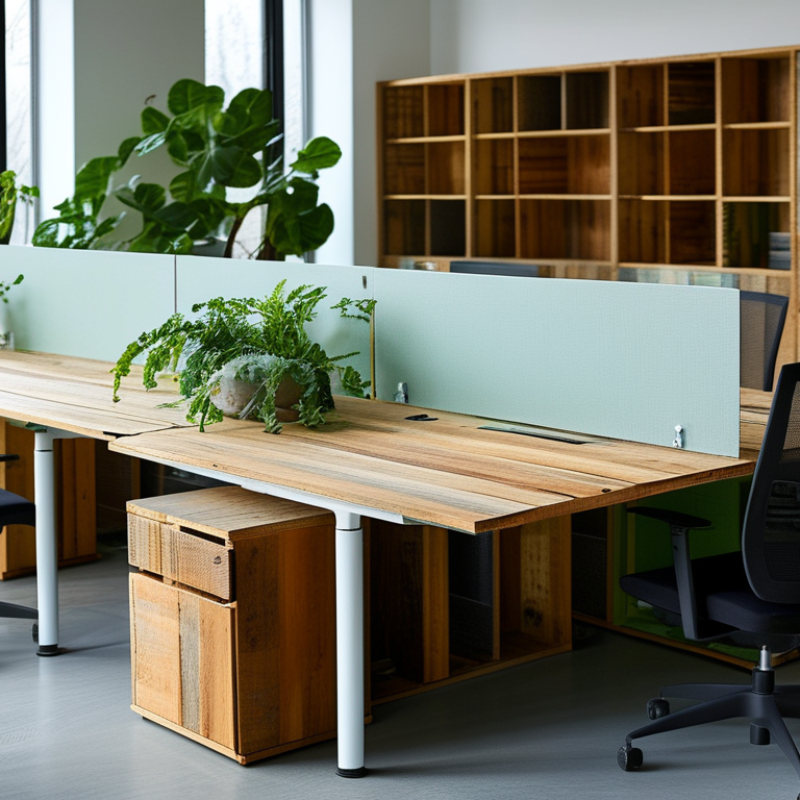
What Are the 10 Best Sustainable Office Furniture Trends?

Reuse + Refurbishment: EPA Reports 12.1M Tons of U.S. Furniture Waste

Reuse and refurbishment are becoming practical answers to the U.S. furniture waste problem. The U.S. Environmental Protection Agency reported 12.1 million tons of furniture and furnishings entered the municipal waste stream in 2018. About 80.2% went to landfills, while only a small share was recycled. These figures make replacement-heavy office planning difficult to defend.

A refurbished desk can retain its frame, surface, and hardware. Reupholstered seating may also reduce demand for new materials. BIFMA’s LEVEL standard evaluates furniture through material selection, manufacturing, energy use, and end-of-life considerations. That approach supports measurable purchasing decisions, not vague green claims. Still, refurbishment is not automatically sustainable. Damaged foam, weak fasteners, or poor repair records can shorten service life. I have seen attractive reused pieces fail because inspections were rushed.

Tips: Create a furniture inventory before buying anything. Record dimensions, materials, age, condition, and repair needs. Prioritize modular desks and replaceable components. Request refurbishment records and indoor-air-quality documentation. Use EPA’s Advancing Sustainable Materials Management data as a baseline, then track avoided purchases, landfill diversion, and extended service years. A simple spreadsheet works. It may reveal that storing unusable furniture is not reuse, but delayed disposal.

Modular + Repairable Design: EU Research Assigns 80% of Impact to Design

What Are the 10 Best Sustainable Office Furniture Trends?

Modular and repairable design now deserves serious attention. EU research assigns about 80% of a product’s environmental impact to design decisions. That figure changes how office buyers should think. A chair is not sustainable merely because it contains recycled plastic. Its parts should separate easily, survive daily use, and remain replaceable.

In a practical office, modular desks can change shape as teams grow. One workstation might become two, without sending the original frame to waste. Replaceable casters, armrests, fabric panels, and cable trays extend useful life. Repair manuals and standard fasteners also help maintenance teams work faster. These details matter during a rainy Tuesday, when a loose leg should not become a disposal decision.

Other strong trends include low-emission materials, recycled content, biophilic elements, ergonomic seating, and energy-efficient manufacturing. Acoustic screens can support shared spaces without permanent construction. Digital inventory systems can track repairs and material histories. However, sustainable claims still need scrutiny. Recycled content may hide difficult adhesives or mixed materials. Modular furniture can also become expensive when replacement parts are unavailable. I have seen well-designed products fail because nobody knew where to order a small connector. That weakness deserves honest attention. Designers, suppliers, and office managers should test disassembly before purchasing large quantities. A five-minute repair test can reveal more than polished marketing language.

10 Best Sustainable Office Furniture Trends

Design-priority index based on circularity principles such as durability, repairability, material efficiency, and end-of-life recovery.

Modular and repairable construction ranks highest because extending product life can reduce replacement demand, material use, and waste. The article’s EU research premise assigns approximately 80% of a product’s environmental impact to design decisions, making early-stage design the main opportunity for improvement. Scores shown here are a comparative editorial index, not market-share data.

Recycled + Bio-Based Materials: Compare EPDs Using ISO 14025

Recycled and bio-based materials are reshaping sustainable office furniture. The U.S. EPA’s 2018 Sustainable Materials Management report recorded 12.1 million tons of furniture and furnishings in municipal waste. About 80.2% went to landfills. That figure makes material selection more than a design preference.

Environmental Product Declarations, or EPDs, provide a stronger comparison method. ISO 14025 defines them as verified, life-cycle-based environmental declarations. Compare products with the same declared unit, function, and Product Category Rules. Check carbon emissions, recycled content, renewable feedstocks, water use, and end-of-life scenarios. A chair with recycled aluminum may perform better than one with bio-based plastic. The opposite can also happen. Numbers can mislead.

GlobalABC reported that buildings and construction produced 37% of global energy- and process-related carbon emissions in 2022. Furniture is a smaller category, but procurement teams can still reduce avoidable impacts. Ask whether recycled content is post-consumer or factory scrap. Inspect the EPD’s biogenic carbon assumptions. Review modules A1–A3, transport, use, and disposal. A lower manufacturing figure may hide difficult recycling. That comparison matters. Procurement decisions also need durability data, repair options, and replaceable components. EPDs are useful, not perfect. Some declarations use different boundaries, databases, or service-life estimates, making direct rankings uncertain.

Low-Emission + Ergonomic Pieces: Apply LEED v4.1 VOC Criteria

What Are the 10 Best Sustainable Office Furniture Trends?

Low-Emission + Ergonomic Pieces: Apply LEED v4.1 VOC Criteria

Sustainable office design now starts with healthier air, not just recycled materials. The U.S. Environmental Protection Agency reports that indoor pollutant levels can be two to five times higher than outdoor levels. Some measurements are far higher. Low-emitting desks, chairs, panels, and storage units can reduce unnecessary exposure from adhesives, coatings, and composite wood.

LEED v4.1 evaluates low-emitting furniture through VOC emissions testing and documented product criteria. Procurement teams should request test results, material disclosures, and certification records. Applicable ANSI/BIFMA e3 pathways can support this review. Check the exact LEED credit requirements. A vague “eco-friendly” claim is not enough.

Ergonomics matters just as much. The U.S. Bureau of Labor Statistics recorded roughly 946,000 occupational musculoskeletal disorder cases involving days away from work in 2023. Height-adjustable desks, adjustable monitor arms, and chairs with responsive lumbar support can reduce awkward posture.

Small details matter. A smooth adjustment handle helps. A stable five-leg base helps more.

Choose components that can be repaired or replaced. That is where many projects become less sustainable. A beautiful chair may still create waste when one broken mechanism requires full disposal. I have seen specifications favor appearance over maintenance. That mistake deserves more attention. Teams should test furniture in a real workspace, with different body sizes, lighting conditions, and daily cleaning routines. EPA, LEED, BIFMA, and BLS data offer stronger guidance than showroom language.

Flexible + Furniture-as-a-Service: Design for 53% Hybrid Workers (Gallup)

What Are the 10 Best Sustainable Office Furniture Trends?

Gallup reports that 53% of employees work in hybrid arrangements. That reality changes office design. Empty desks should not consume space, energy, or materials every day.

Flexible furniture supports changing team sizes. Choose desks with casters, folding tables, modular storage, and movable acoustic screens. A meeting area can become a project zone within minutes. Height-adjustable desks also support different users and working styles. Durable materials matter. Recycled steel, responsibly sourced wood, and replaceable upholstery can extend product life. However, sustainable labels need evidence. Ask for lifecycle data, repair options, and material disclosures.

Tips: Measure weekly occupancy before buying furniture. Test one flexible zone for a month. Record what workers move, ignore, or dislike. The results may challenge your original plan.

Furniture-as-a-Service offers another practical model. Instead of purchasing everything outright, organizations lease furniture with maintenance, upgrades, and return arrangements. This approach can reduce storage problems and encourage reuse. It works best when contracts explain repair duties, refurbishment standards, and end-of-use handling. Facilities teams should track every item with a simple asset record. A scratched desk is not automatically waste. It may need a new surface, not replacement. Still, service models can become expensive when terms are unclear. Review total costs, worker comfort, and actual environmental benefits every year.

What Are the 10 Best Sustainable Office Furniture Trends?

Flexible + Furniture-as-a-Service: Design for 53% Hybrid Workers

# Sustainable Furniture Trend Relevant Data Point Design Direction for Hybrid Work Measurable Sustainability KPI Practical Application
01 Modular and Reconfigurable Furniture Hybrid work requires spaces that can change between individual work, collaboration, training, and video meetings. A 53% hybrid-work rate among remote-capable employees indicates a strong need for adaptable layouts. Use movable screens, freestanding storage, adjustable tables, demountable panels, and interchangeable components rather than fixed construction. Percentage of furniture components that can be relocated, replaced, or reconfigured without purchasing a new product. Create neighborhood-based work zones that can be resized weekly according to occupancy and team schedules.
02 Furniture-as-a-Service A service model shifts purchasing from one-time ownership to access, maintenance, refurbishment, redistribution, and end-of-use recovery. Specify furniture agreements that include delivery, installation, repair, replacement parts, take-back, and documented end-of-life processing. Percentage of purchased or leased items with a documented return, repair, reuse, or recycling pathway. Use occupancy data to add or remove workstations without creating a surplus of unused desks and chairs.
03 Refurbished and Reused Furniture Furniture and furnishings are included in national municipal solid-waste inventories; a 2018 U.S. estimate reported approximately 12.1 million tons discarded. Prioritize inventory audits, refurbishment, reupholstery, cleaning, and internal redistribution before buying new products. Percentage of the furniture program supplied through reuse or refurbishment, measured by units and by total weight. Maintain a digital asset register showing location, condition, age, repair history, and next available use.
04 Design for Disassembly Products designed with accessible fasteners and separable materials are easier to repair, upgrade, reuse, and recycle than permanently bonded products. Select screw-fixed, clip-fixed, or otherwise reversible connections and avoid unnecessary adhesives or inseparable material combinations. Documented disassembly time, number of common tools required, and percentage of major materials that can be separated. Require assembly instructions, repair manuals, material declarations, and replacement-part information.
05 Low-Carbon Materials with EPD Data An Environmental Product Declaration reports life-cycle impacts using product-category rules and life-cycle assessment methods. Compare products using the same declared unit, service life, life-cycle modules, and functional performance requirements. Reported global-warming potential in kilograms of CO₂e per functional unit, supported by a verified declaration. Add embodied-carbon thresholds to furniture specifications and evaluate the complete life cycle instead of purchase price alone.
06 Recycled and Bio-Based Content Environmental claims should identify whether content is pre-consumer or post-consumer and should be supported by documented material evidence. Use recycled metal, recycled plastics, reclaimed wood, rapidly renewable fibers, and bio-based finishes where performance and durability are verified. Percentage of recycled or bio-based content by weight, reported separately for each major material. Request chain-of-custody records, recycled-content declarations, and durability test results for every material claim.
07 Certified Responsible Wood Wood certification systems use documented chain-of-custody processes to connect forest-based materials with verified sources. Favor durable timber, plywood, and veneer with clear species information, recycled content details, or credible responsible-forest documentation. Percentage of wood-based material with independently verified responsible-sourcing or recycled-content documentation. Avoid vague claims such as “green wood” and retain certificates, invoices, and chain-of-custody records.
08 Repairable and Upgradeable Components Repair extends useful life and can prevent premature replacement when high-wear parts such as casters, mechanisms, tabletops, and upholstery are replaceable. Specify replaceable covers, standardized fasteners, modular power modules, and readily available spare parts. Average repair completion time, spare-part availability, and percentage of repairs completed without replacing the entire product. Create a repair log and establish a maximum response time for common furniture failures.
09 Low-Emission and Healthy Materials Indoor-air-quality assessment methods evaluate emissions of volatile organic compounds from building and furnishing products. Choose low-emitting adhesives, coatings, laminates, textiles, and composite wood products, especially for enclosed meeting rooms. Percentage of specified products supported by recognized indoor-air-emissions test results or low-emission documentation. Allow newly delivered furniture to off-gas in a ventilated area before installation in densely occupied spaces.
10 Multi-Functional and Space-Efficient Furniture Hybrid offices often experience variable daily occupancy, making furniture that supports multiple activities more resource-efficient than single-purpose layouts. Combine storage, acoustic control, privacy, power access, and collaboration functions in movable units. Average number of functions supported per furniture unit and average occupied workpoints compared with total installed workpoints. Use movable furniture to convert underused desks into touchdown areas, project rooms, or shared collaboration zones.

Data and methodology notes

  • The 53% figure refers to remote-capable employees working in a hybrid arrangement, not to the entire workforce.
  • The approximately 12.1 million tons figure refers to U.S. furniture and furnishings discarded in 2018, as reported in a national municipal solid-waste inventory.
  • Environmental Product Declarations, life-cycle assessment, chain-of-custody documentation, recycled-content declarations, and indoor-air-emissions testing are recognized methods for substantiating sustainability claims.
  • KPIs should be tracked by unit, weight, service life, repair activity, material composition, and end-of-use destination to avoid relying on unsupported “eco-friendly” claims.

FAQS

Why should offices reuse or refurbish furniture?

U.S. data reported 12.1 million tons of furniture waste in 2018. About 80.2% entered landfills. Refurbishment can preserve frames, surfaces, hardware, and upholstery. It may reduce replacement purchases. Not always. Poor repairs can shorten service life.

What should an office inspect before buying refurbished furniture?

Check frames, fasteners, foam, surfaces, casters, and upholstery. Look for cracks, wobbling legs, stains, and missing parts. Request repair records and indoor-air-quality documents. A clean appearance proves little. I would not skip a hands-on inspection.

How can modular furniture reduce waste?

Modular desks can change as teams grow. One workstation may become two. Replaceable armrests, casters, cable trays, and fabric panels extend useful life. Standard fasteners simplify repairs. Test disassembly before ordering large quantities. Five minutes can reveal hidden problems.

Which furniture materials and features support longer use?

Durable steel, responsibly sourced wood, and replaceable upholstery can support longer service. Low-emission materials may improve indoor conditions. Recycled content can help, but it is not enough. Adhesives and mixed materials may complicate repairs. The label may oversimplify reality.

How should offices plan furniture for hybrid work?

Measure weekly desk occupancy before purchasing. Use movable desks, folding tables, modular storage, and acoustic screens. A meeting area can become a project zone quickly. Test one flexible area for a month. Workers may ignore your favorite layout.

What does furniture-as-a-service offer?

It can combine furniture access, maintenance, upgrades, and return arrangements. This model may reduce storage problems and encourage reuse. Contracts should define repairs, refurbishment quality, and end-of-use handling. Track every item with an asset record. Unclear terms can increase total costs.

How can offices measure environmental progress?

Create an inventory with dimensions, materials, age, condition, and repair needs. Track avoided purchases, landfill diversion, and extended service years. A simple spreadsheet is sufficient. Compare storage costs with actual reuse. Stored unusable furniture is delayed disposal, not successful reuse.

What design trends deserve careful attention?

Repairable, modular, ergonomic, low-emission, and flexible designs deserve attention. Research suggests design decisions create about 80% of environmental impact. Hybrid work affects roughly 53% of employees in one major survey. Still, sustainable claims need evidence. Parts must remain available. That detail is often forgotten.

Conclusion

What are the latest trends in sustainable office furniture? The most important developments focus on extending product life, reducing material waste, and supporting healthier workplaces. Reuse and refurbishment can help address the 12.1 million tons of furniture waste reported annually in the United States, while modular and repairable designs make it easier to replace individual components instead of entire pieces. These approaches can reduce resource consumption and keep useful furniture in circulation for longer.

Material selection is also becoming more transparent, with recycled and bio-based options evaluated through Environmental Product Declarations based on ISO 14025. Low-emission and ergonomic furniture supports indoor air quality and employee well-being, while LEED v4.1 VOC criteria provide a practical reference for healthier choices. Finally, flexible layouts and furniture-as-a-service models can better serve the 53% of workers identified as hybrid by Gallup, allowing offices to adapt efficiently as work patterns change.

Liam

Liam

Liam is a dedicated marketing professional with a profound expertise in the industry, where he excels at highlighting the unique advantages of our core products. With a keen understanding of market trends and consumer needs, Liam frequently updates our company’s professional blog, providing......